DNA DIAGNOSIS
In the past, the diagnosis of genetic disorders was based on recognition of a cellular effect or secondary product of a mutant gene. Presently using various techniques of recombinant DNA technology, genetic diseases can be investigated and diagnosed at the level of the abnormal gene itself. Several methods are available for this purpose, the principles of which are discussed below.
SOUTHERN BLOT
It combines the use of gel electrophoresis and specific probes. Fig. 33. The stages are :

Fig 33
- DNA is extracted from white blood cells.
- Using specific restriction enzymes, sequence - specific cuts are made producing DNA fragments. If an abnormal length is sliced due to a mutation and an abnormal sequence, that segment is referred to as a Restriction Fragment Length Polymorphism (RFLP).
- DNA fragments are separated using gel electrophoresis.
- DNA is denatured to separate strands and transferred
to a membrane
(nitrocellulose paper) by placing the membrane between the gel and a stack of paper towels. The DNA moves out of the gel into the membrane (nitrocellulose paper). - Labelled DNA probe is added which recognises and hybridises with the complementary DNA sequence allowing the specific fragment of interest to be detected.
POLYMERASE CHAIN REACTION (PCR)
It is a powerful technique for selective and rapid amplification of target DNA. Fig. 34.
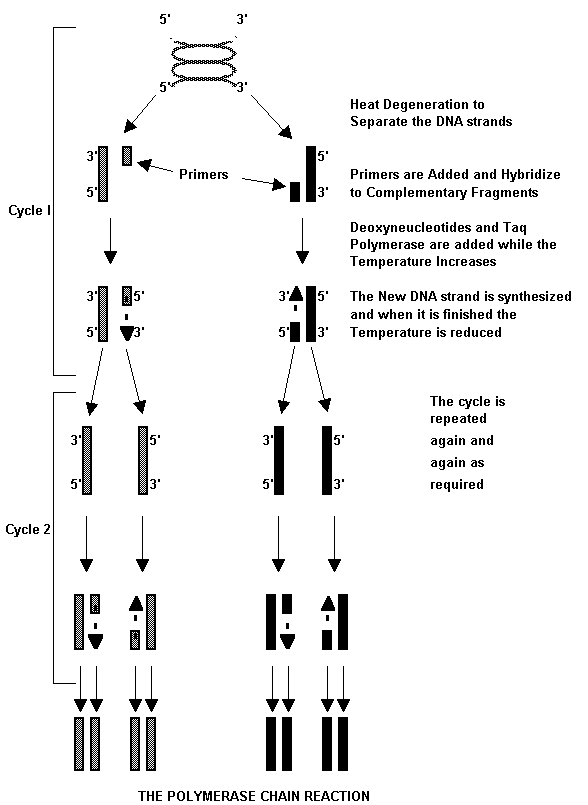
Fig 34
- Heat is used to separate the two strands of DNA.
- Segment between the primers is amplified using Taq polymerase and deoxynucleotides.
- Increase of temperature stops the reaction which restarts when the temperature drops.
- The amount of amplified DNA increases with each cycle.
This is a quick advanced technique that uses a small quantity of DNA.
DNA SEQUENCING
This technique is very costly and primarily used for research. Following the PCR the products are subject to rapid sequencing.
Using recombinant DNA technology major gene rearrangements (deletions, insertions and duplications), single nucleotide substitutions or point mutations can be detected. Major rearrangements are seen in less than 10% of cases of familial hypercholesterolaemia and haemophilia. Deletions are seen in more than 50% of Duchenne muscular dystrophy, Becker muscular dystrophy and Alpha thalassemia. DNA fingerprints are used in paternity disputes and criminology.
FLUORESCENCE IN SITU HYBRIDIZATION (FISH)
This is an excellent method of investigation, created by the use of both chromosome culture (cytogenetics) and molecular biology techniques. It is used to idenfity specific genes, regions of chromosomes, chromosomes involved in numerical and gross structural arrangements, as well as those which are involved in small deletions and duplications. In addition, chromosome rearrangements involving severral chromosomes, which are too complexed to be analysed by banding methods are easily resolved using FISH.
In this method DNA probes tagged with coloured fluorescent dyes are used to seek out complementary DNA segments for which they have been created. The presence of fluorescence indicates the presence of the normal gene or a particular series of DNA, characteristic for a particular chromosome.